Humanities at The Yellow House School
At The Yellow House, Humanities helps students understand the world around them while developing confidence, curiosity and cultural awareness. Through a therapeutic, relationship-based approach, students explore history, geography, religion, culture and society in ways that are engaging, practical and meaningful.
Learning takes place in small groups or through one-to-one teaching where appropriate, enabling every student to access the curriculum at a pace that suits them. Lessons are hands-on, multisensory and carefully adapted to meet individual needs, supporting both academic progress and emotional wellbeing.
Students begin with our Therapeutic Humanities curriculum in Year 9 before choosing one of three pathways for Years 10 and 11:
Learning takes place in small groups or through one-to-one teaching where appropriate, enabling every student to access the curriculum at a pace that suits them. Lessons are hands-on, multisensory and carefully adapted to meet individual needs, supporting both academic progress and emotional wellbeing.
Students begin with our Therapeutic Humanities curriculum in Year 9 before choosing one of three pathways for Years 10 and 11:
- AQA GCSE Geography
- AQA GCSE History
- Therapeutic Humanities
Therapeutic Humanities
Our Therapeutic Humanities curriculum explores a broad range of historical, geographical and cultural topics and is designed to broaden students' understanding of the world, develop cultural capital and encourage curiosity through engaging learning experiences.
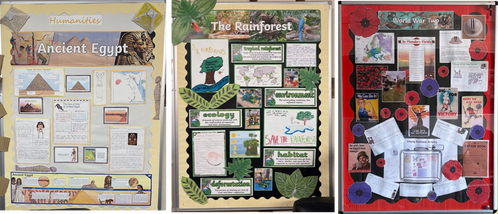
In Year 9, students establish strong foundations for future Humanities study. They investigate topics including UK landscapes, tropical rainforests, the Romans, the Titanic and basic religious beliefs, before completing an independent research project on a country of their choice. Alongside subject knowledge, students develop research, communication and enquiry skills that prepare them for further study.
If continuing with Therapeutic Humanities Year 10 students broaden their understanding of both historical and contemporary issues. They explore natural hazards and climate change, festivals of light across different religions, the Civil Rights Movement and influential figures such as Rosa Parks and Martin Luther King Jr. They also study Ancient Egypt, develop basic modern foreign language skills and learn about life in Norman England. Throughout the year, learning encourages students to consider different perspectives while building empathy, confidence and critical thinking.
In Year 11, students apply the knowledge and skills they have developed through topics including prejudice and discrimination, Britain during the Second World War, travel and tourism, Elizabethan England, witchcraft in the seventeenth century, local history, and global megacities. The course concludes with an independent research project based on the local area, giving students the opportunity to investigate an aspect of their own community while developing valuable research and presentation skills.
In Year 9, students establish strong foundations for future Humanities study. They investigate topics including UK landscapes, tropical rainforests, the Romans, the Titanic and basic religious beliefs, before completing an independent research project on a country of their choice. Alongside subject knowledge, students develop research, communication and enquiry skills that prepare them for further study.
If continuing with Therapeutic Humanities Year 10 students broaden their understanding of both historical and contemporary issues. They explore natural hazards and climate change, festivals of light across different religions, the Civil Rights Movement and influential figures such as Rosa Parks and Martin Luther King Jr. They also study Ancient Egypt, develop basic modern foreign language skills and learn about life in Norman England. Throughout the year, learning encourages students to consider different perspectives while building empathy, confidence and critical thinking.
In Year 11, students apply the knowledge and skills they have developed through topics including prejudice and discrimination, Britain during the Second World War, travel and tourism, Elizabethan England, witchcraft in the seventeenth century, local history, and global megacities. The course concludes with an independent research project based on the local area, giving students the opportunity to investigate an aspect of their own community while developing valuable research and presentation skills.
GCSE Humanities
AQA GCSE Geography
AQA GCSE Geography develops students' understanding of the physical and human world while encouraging them to think critically about the environments and communities in which they live. Students build geographical knowledge alongside practical skills including map interpretation, data analysis, decision-making and fieldwork.
In Year 10, students focus on the physical environment. They study natural hazards such as earthquakes, volcanoes, extreme weather and climate change before investigating ecosystems including tropical rainforests and cold environments. Later in the year, they examine river and coastal landscapes and complete physical fieldwork, collecting and analysing data in real-world settings.
During Year 11, attention turns to the human environment. Students explore urban growth and the challenges facing cities, investigate the changing economic world and consider how resources are managed sustainably. Human fieldwork enables students to investigate how people use and interact with places, helping them connect classroom learning with real-life environments.
Throughout the course, students prepare for the three AQA GCSE Geography examinations covering Physical Geography, Human Geography and Geographical Applications. Regular retrieval practice, personalised support and structured exam preparation help students develop confidence and achieve their full potential.
AQA GCSE History
Our AQA GCSE History course encourages students to investigate the past, evaluate historical evidence and understand how historical events continue to shape the modern world. Students develop analytical thinking, communication and essay-writing skills while building confidence in interpreting historical sources.
Students study four key areas of the AQA specification: Germany: Democracy and Dictatorship, 1890–1945; Conflict and Tension: The Inter-War Years, 1918–1939; Britain: Health and the People c1000–Present Day; and Norman England, 1066–1100.
In Year 10, students develop a secure understanding of each topic and place events within their wider historical context. Where possible, learning is enhanced through visits to museums, historical sites and exhibitions linked to their Historic Environment study, helping students bring history to life beyond the classroom.
In Year 11, students revisit each topic in greater depth while refining the examination skills needed for GCSE success. They practise analysing historical sources, evaluating interpretations and constructing well-supported written arguments. Regular revision, retrieval practice and personalised guidance ensure students develop the confidence and knowledge required for their final examinations.
Across every Humanities pathway, our curriculum reflects the values and ethos of The Yellow House. We believe that students learn best when they feel safe, understood and supported. Our small class sizes and personalised approach enable teachers to adapt learning to individual strengths and needs, helping every student to succeed.
Whether following Therapeutic Humanities or studying for GCSE qualifications, students leave with a broader understanding of the world, increased cultural capital, stronger research and communication skills, and the confidence to take the next step in their educational journey.
If you have any queries or questions relating to Humanities please do not hesitate to contact:
Therapeutic Humanities and GCSE Geography Lead - frances.speary@theyellowhouseschool.org.uk
Mia.Jadeja@theyellowhouseschool.org.uk
AQA GCSE Geography develops students' understanding of the physical and human world while encouraging them to think critically about the environments and communities in which they live. Students build geographical knowledge alongside practical skills including map interpretation, data analysis, decision-making and fieldwork.
In Year 10, students focus on the physical environment. They study natural hazards such as earthquakes, volcanoes, extreme weather and climate change before investigating ecosystems including tropical rainforests and cold environments. Later in the year, they examine river and coastal landscapes and complete physical fieldwork, collecting and analysing data in real-world settings.
During Year 11, attention turns to the human environment. Students explore urban growth and the challenges facing cities, investigate the changing economic world and consider how resources are managed sustainably. Human fieldwork enables students to investigate how people use and interact with places, helping them connect classroom learning with real-life environments.
Throughout the course, students prepare for the three AQA GCSE Geography examinations covering Physical Geography, Human Geography and Geographical Applications. Regular retrieval practice, personalised support and structured exam preparation help students develop confidence and achieve their full potential.
AQA GCSE History
Our AQA GCSE History course encourages students to investigate the past, evaluate historical evidence and understand how historical events continue to shape the modern world. Students develop analytical thinking, communication and essay-writing skills while building confidence in interpreting historical sources.
Students study four key areas of the AQA specification: Germany: Democracy and Dictatorship, 1890–1945; Conflict and Tension: The Inter-War Years, 1918–1939; Britain: Health and the People c1000–Present Day; and Norman England, 1066–1100.
In Year 10, students develop a secure understanding of each topic and place events within their wider historical context. Where possible, learning is enhanced through visits to museums, historical sites and exhibitions linked to their Historic Environment study, helping students bring history to life beyond the classroom.
In Year 11, students revisit each topic in greater depth while refining the examination skills needed for GCSE success. They practise analysing historical sources, evaluating interpretations and constructing well-supported written arguments. Regular revision, retrieval practice and personalised guidance ensure students develop the confidence and knowledge required for their final examinations.
Across every Humanities pathway, our curriculum reflects the values and ethos of The Yellow House. We believe that students learn best when they feel safe, understood and supported. Our small class sizes and personalised approach enable teachers to adapt learning to individual strengths and needs, helping every student to succeed.
Whether following Therapeutic Humanities or studying for GCSE qualifications, students leave with a broader understanding of the world, increased cultural capital, stronger research and communication skills, and the confidence to take the next step in their educational journey.
If you have any queries or questions relating to Humanities please do not hesitate to contact:
Therapeutic Humanities and GCSE Geography Lead - frances.speary@theyellowhouseschool.org.uk
Mia.Jadeja@theyellowhouseschool.org.uk